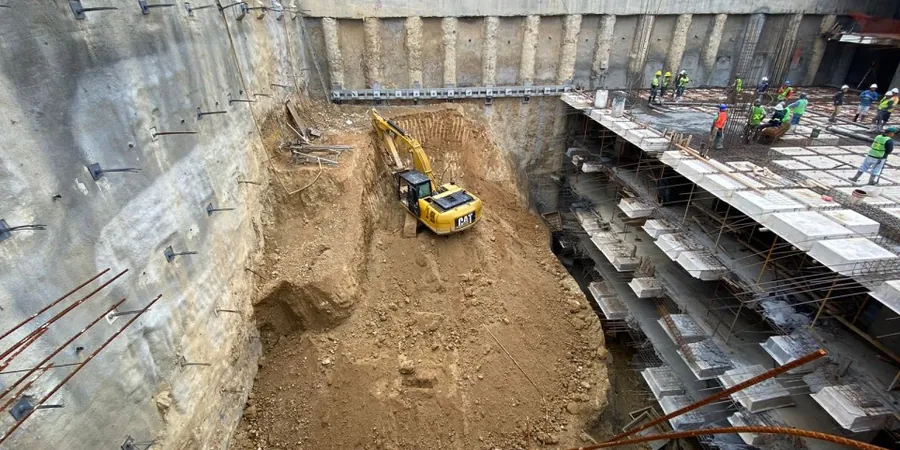
Memphis sits atop a unique geological inheritance—thick deposits of loess windblown silt draped over the Lafayette gravels and the underlying Jackson Formation. As the city expanded from its riverfront trading post roots, downtown development pushed deeper into this stratified profile, where the Memphis Sand aquifer lies less than 50 feet below street level in many locations. A geotechnical design of deep excavations here is less about textbook bearing capacity and more about managing groundwater and collapse-prone soils. When a new parking garage or utility vault goes three or four levels down, the dewatering plan often dictates the shoring system, not the other way around. Our team integrates field data from spt-drilling to establish the depth to the water table and the consistency of the loess before selecting a support strategy that keeps adjacent historic brick buildings stable.
In Memphis, the excavation support system is selected by the groundwater table, not just the soil type. Manage the water, and the excavation stays safe.