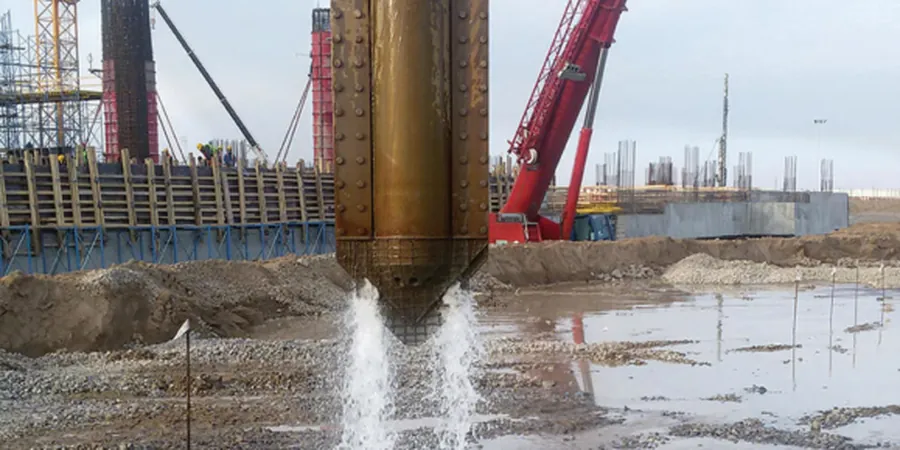
Memphis sits on 3,000 feet of Mississippi Embayment sediments. That deep alluvial blanket means loose, saturated sands are a fact of life here. Since the 1811-1812 New Madrid earthquakes — magnitude 7.5 events that rang church bells in Boston — engineers have known compaction isn't optional. It's survival. The city's 630,000 residents live above soils that can liquefy under the right shaking. Vibrocompaction design tackles that risk directly. We develop depth-specific densification programs using vibroflot arrays calibrated to local stratigraphy. Field data from the Memphis Sand aquifer and overlying alluvium drive every design parameter. A CPT test profile pinpoints target zones before mobilization. The goal is straightforward: raise relative density above 70% and keep it there when the next big one hits.
Loose alluvium plus New Madrid seismicity equals a design problem vibrocompaction was built to solve.