GEOTECHNICAL ENGINEERING
MEMPHIS
HomeLaboratoryAtterberg limits

Atterberg Limits Testing for Memphis Construction Projects

Technical studies that support your project.

LEARN MORE

Memphis sits on the New Madrid seismic zone, but the day-to-day challenge for construction here isn't just earthquakes—it's the clay. The Jackson Formation underlies much of the city, and these overconsolidated clays change volume dramatically with moisture. At 335 feet above sea level on the Chickasaw Bluffs, our lab sees Atterberg limits ranging from low-plasticity silts on the bluff tops to fat clays with liquid limits exceeding 60 in the Wolf River floodplain. A standard grain-size analysis tells you the particle distribution, but the Atterberg limits reveal how that soil behaves when it gets wet—and in Memphis, with 53 inches of annual rainfall, it will get wet. We run these tests on every foundation investigation south of I-240 because the shrink-swell potential in these Paleogene clays can turn a slab-on-grade into a structural headache within two seasons.

A plasticity index above 25 in Memphis clays means you're designing for volume change, not just bearing capacity—skip the Atterbergs and you're guessing at the most expensive parameter on the job.
Our service areas

Methodology and scope

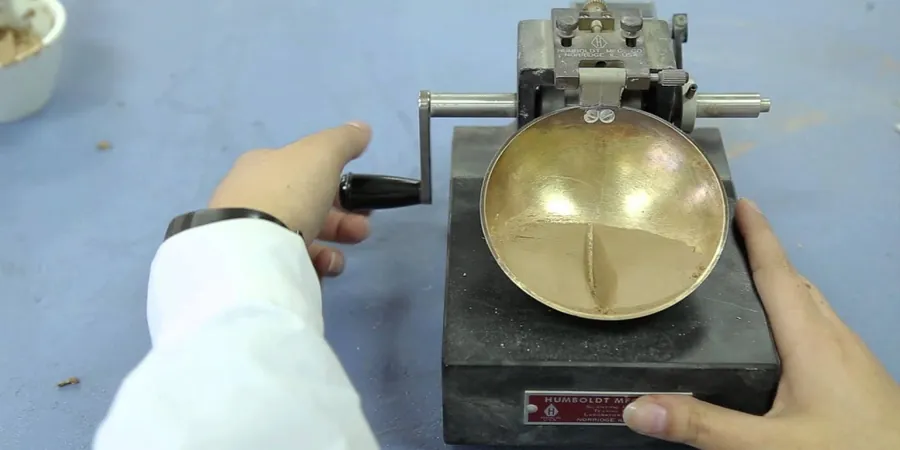
The mistake we see repeatedly is contractors relying on visual classification alone. A brown silty clay from a Germantown site might look identical to one from Collierville, but one has a plasticity index of 12 and the other hits 35. That difference determines whether you need a 12-inch select fill cushion or a full 24-inch undercut with moisture conditioning. Our lab runs the full suite: liquid limit by the Casagrande percussion cup method, plastic limit by the 3-mm thread rolling procedure, and we calculate the plasticity index and liquidity index for every sample. We use ASTM D4318-17e1 as our baseline, with all equipment calibrated quarterly under our ISO 17025 scope. Turnaround is three business days standard, with same-day results available when the grader is already on site and the weather window is closing. The report includes the Unified Soil Classification symbol and the AASHTO group index so your pavement design engineer can plug the numbers straight into the 1993 AASHTO Guide for Design of Pavement Structures.
Atterberg Limits Testing for Memphis Construction Projects
Technical reference — Memphis

Local considerations

In the loess-covered bluffs east of downtown Memphis, we've pulled samples that look firm and dry in the Shelby tube but turn to soup at the liquid limit. That's the trap—undisturbed samples from 15 feet down can mask a clay mineralogy dominated by smectite, which swells on contact with water. If you pour a footing without knowing the plasticity index, you're betting that the moisture content under the slab won't change over the life of the structure. But Memphis has mature trees everywhere—oaks, sweetgums, hackberries—and their root systems pull moisture differentially through the seasons. A PI of 30 under the east corner of a building while the west corner sits on PI 8 silt means differential heave that cracks masonry walls from the inside out. We've seen it in East Memphis ranch houses and in tilt-up warehouses in DeSoto County. The Atterberg limits test costs a fraction of one percent of the foundation budget and answers the question that visual logging cannot: how much will this soil move?

Need a geotechnical assessment?

Reply within 24h.

Email: contact@geotechnical-engineering1.org

Applicable standards

ASTM D4318-17e1: Standard Test Methods for Liquid Limit, Plastic Limit, and Plasticity Index of Soils, ASTM D2487-17: Standard Practice for Classification of Soils for Engineering Purposes (Unified Soil Classification System), AASHTO T 89-22: Standard Method of Test for Determining the Liquid Limit of Soils, AASHTO T 90-22: Standard Method of Test for Determining the Plastic Limit and Plasticity Index of Soils, AASHTO M 145-91: Standard Specification for Classification of Soils and Soil-Aggregate Mixtures for Highway Construction Purposes

Technical parameters

ParameterTypical value
Test StandardASTM D4318-17e1
Liquid Limit MethodCasagrande percussion cup (multipoint)
Plastic Limit Method3-mm thread rolling procedure
Sample PreparationWet preparation, sieved through No. 40 (425 µm)
Minimum Sample Mass150 g of minus No. 40 material
Reported ParametersLL, PL, PI, LI, USCS symbol, AASHTO classification
Standard Turnaround3 business days (same-day expedite available)
Lab AccreditationISO/IEC 17025:2017, AASHTO R18 compliant

Frequently asked questions

What do Atterberg limits actually measure, and why does it matter for my Memphis building site?

Atterberg limits measure the water content boundaries at which fine-grained soil changes consistency—from solid to semisolid (shrinkage limit), semisolid to plastic (plastic limit), and plastic to liquid (liquid limit). The difference between the liquid limit and plastic limit is the plasticity index, or PI. In Memphis, the PI is the single most practical number for predicting shrink-swell behavior because our Jackson Formation clays contain smectite-group minerals that expand when wet. A PI under 15 suggests low expansion potential; 15-25 is moderate; above 25 means you need to account for significant volume change in foundation design. The IBC references these thresholds directly in Table 1808.8.2 for drilled pier design in expansive soils.

How much does Atterberg limits testing cost for a typical residential lot in Memphis?

For a single sample with the full liquid limit and plastic limit determination per ASTM D4318, you're looking at US$60 to US$100 depending on whether it's a standalone request or part of a larger testing program. Most residential sites in Shelby County need two to four samples taken from different depths and locations to capture the variability of the Jackson Formation and any loess cap. A typical three-sample package runs in the US$180 to US$300 range, which includes the USCS classification and a brief interpretive note on shrink-swell potential.

How long does the test take, and can you rush results if my excavation is open?

Standard turnaround is three business days from sample receipt. The liquid limit requires a minimum of three trial points per the multipoint method, plus overnight oven drying for moisture content verification—that's physics, not bureaucracy. However, we do offer expedited processing. If you drop samples at our lab by 10 am, we can often have the PI and USCS classification to you by end of day or first thing the next morning. Call ahead so we can clear the bench schedule. Open excavations in Memphis don't mix well with afternoon thunderstorms, so we understand the urgency.

What's the difference between the Casagrande cup method and the fall cone test, and which one do you use?

We use the Casagrande percussion cup method per ASTM D4318 because it remains the standard of practice for US geotechnical reports and is referenced directly in AASHTO T 89, IBC Chapter 18, and most Memphis-area municipal building codes. The fall cone method (used more in Europe and specified in BS 1377) yields comparable liquid limit values but isn't the norm for domestic projects. If you have a project with international stakeholders or need correlation data, we can run both methods and provide a comparative analysis. For 99% of Memphis work—residential foundations, commercial pads, roadway subgrades—the Casagrande cup is what your geotechnical engineer expects to see on the boring log.

Can you run Atterberg limits on samples that have already dried out?

The short answer is no—not reliably. ASTM D4318 requires wet preparation starting from the natural moisture condition because oven drying can irreversibly alter the clay mineral structure, particularly in smectitic clays like those in the Jackson Formation. We've seen pre-dried Memphis clay samples give liquid limits 15 to 20 points lower than the true value because the interlayer water in the smectite structure doesn't fully rehydrate. If you have bag samples that have been sitting in a truck bed for a week in August, we'll still test them, but the report will note that the sample condition was compromised and the results may under-represent the true plasticity. The best practice is to seal samples in airtight containers immediately after extraction and deliver them to the lab within 24 hours.

Location and service area

We serve projects across Memphis and its metropolitan area.

View larger map