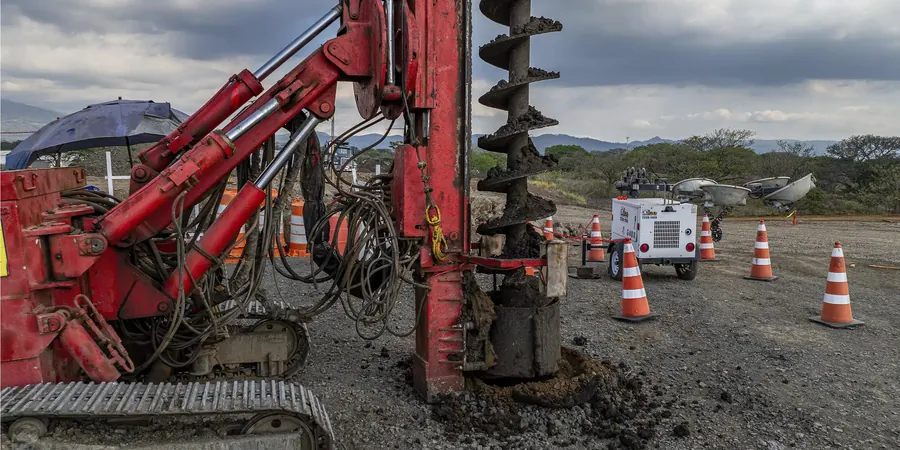
The vibratory probe and bottom-feed hopper are the workhorses of stone column installation in Memphis. The equipment pushes graded stone through soft alluvium—the kind that blankets the Mississippi River plain—displacing weak clay and silt laterally. A 130-ton crawler crane or a purpose-built vibroflot delivers the vertical force needed to reach bearing strata, often 20 to 40 feet below the surface. Memphis sits on Holocene-age Mississippi River deposits: loose sands, fat clays, and organic silts that amplify seismic shaking. The New Madrid seismic zone, which produced the 1811–1812 earthquakes, makes stone column design here a seismic necessity, not just a settlement fix. When the probe withdraws in 12-inch lifts, the stone column compacts against the surrounding soil, forming a stiff inclusion that drains pore pressure and densifies the matrix. For sites near the Wolf River or Nonconnah Creek, where groundwater is high, we often combine stone columns with a pre-loading program to accelerate consolidation before structural loads are applied.
In the New Madrid zone, stone columns work double duty: they carry vertical load and drain excess pore pressure during an earthquake.