GEOTECHNICAL ENGINEERING
MEMPHIS
HomeIn-Situ Testing

In-Situ Testing in Memphis

Technical studies that support your project.

LEARN MORE

In-Situ Testing in Memphis provides direct evaluation of subsurface conditions without disturbing the natural soil fabric, critical given the region’s complex Mississippi Embayment geology. From the loess-covered bluffs to the alluvial floodplains, local site investigations must meet ASTM standards and IBC Chapter 18 requirements to ensure reliable foundation design. Our field density test (sand cone method) is widely used here to verify compaction on engineered fill over soft, compressible clays common in Shelby County, delivering accurate in-place density data per ASTM D1556.

These tests are indispensable for commercial developments, roadway embankments, and flood-protection infrastructure along the Wolf and Mississippi Rivers. Whether confirming bearing capacity for shallow footings or validating backfill behind retaining walls, in-situ methods reduce uncertainty in variable soils. Complement density verification with our plate load test and dilatometer testing for modulus and strength profiling that aligns with Memphis-specific geotechnical challenges.

Available services

Field density test (sand cone method)

→ Ver detalle

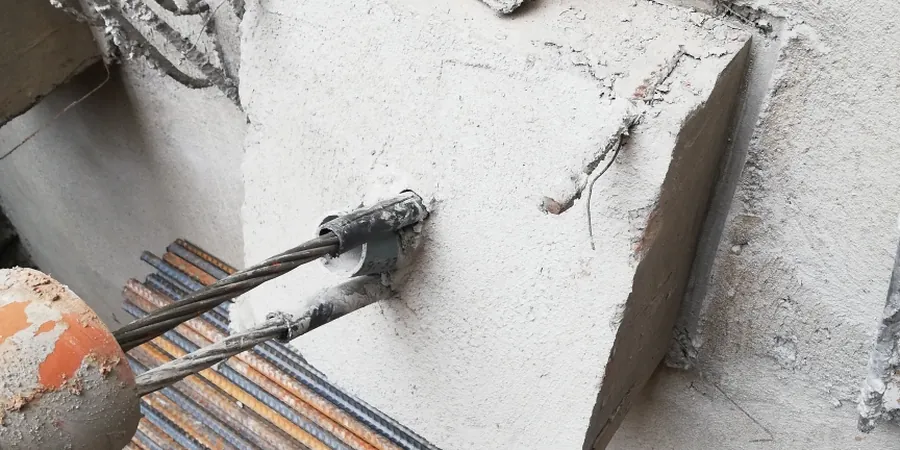
Specifying the wrong anchor type in Memphis alluvium turns a straightforward shoring job into a costly re-drill. We see it when crews attempt active bar anchors in low-strength clay without verifying the bond zone length—creep sets in within days. The Mississippi Embayment deposits that underlie the city, from the Jackson Formation silt to the younger alluvial sands, demand a clear distinction between active tendons that rely on a stressed free length and passive inclusions that engage the ground through deformation. Our laboratory anchors this decision on direct shear data, Atterberg limits, and index testing tied to AASHTO LRFD Section 11, so the design matches the actual stratigraphy rather than an assumed one. For deeper cuts near the Wolf River where soft layers alternate with dense sand, we often cross-check anchor capacity with CPT testing to refine the unit side resistance before finalizing the unbonded length.

In Memphis, the line between an active and passive anchor is drawn by the clay fraction: below 30 percent, post-tensioning works; above, passive grouted bars are often more reliable.
Our service areas

Methodology and scope

Downtown Memphis redevelopment kicked off in earnest after the 1927 Mississippi flood prompted the first systematic levee and foundation studies, and the city has been building on thick Quaternary alluvium ever since. That history left a patchwork of fill, natural levee deposits, and backswamp clays that change within a single block. Active anchors here typically use Dywidag or Williams bar systems post-tensioned to 60–70 percent of the ultimate tensile strength, with a defined free length through the active wedge behind a soldier pile wall. Passive anchors—often drilled and grouted solid bars or helical shafts—develop resistance through strain compatibility with the retained soil, which makes them practical for shallow cuts in the stiff loess that caps the bluffs east of downtown. Both systems require a sacrificial anode or double-corrosion protection because the water table sits high year-round, and the Mississippi River stage fluctuates 15–20 feet between low water and flood crest. This reality pushes every design toward the retaining wall interface, where anchor head embedment and drainage detailing determine whether the system lasts two decades or starts rusting in five.
Active and Passive Anchor Design for Deep Excavations in Memphis
Technical reference — Memphis

Local considerations

A 30-foot excavation on Union Avenue for a mixed-use mid-rise ran into trouble when passive anchors grouted into saturated silt began creeping after a 3-inch rain event. The contractor had skipped the pre-production pull-out test, assuming the bond values from the geotechnical report were conservative. They were not. The upper 12 feet of silt had a plasticity index below 10, which dropped the unit bond to less than half the tabulated value once the ground saturated. We mobilized within 48 hours to run a series of creep tests on the already-installed anchors, isolated the failing ones, and redesigned the remaining rows with a longer bond zone in the underlying sand. The lesson is straightforward: Memphis soils lose bond fast when water content spikes, so every anchor design—active or passive—needs load-test verification on site, not just a desk correlation from SPT blow counts.

Need a geotechnical assessment?

Reply within 24h.

Email: contact@geotechnical-engineering1.org

Applicable standards

AASHTO LRFD Bridge Design Specifications, Section 11 (Soil–Structure Interaction), PTI DC35.1-14 Recommendations for Prestressed Rock and Soil Anchors, IBC 2021 Chapter 18 (Soils and Foundations), ASTM A615 Grade 75 and Grade 80 for threaded bar anchors, ASTM A416 Grade 270 for strand tendons

Technical parameters

ParameterTypical value
Anchor typeActive (stressed) and passive (non-stressed)
Design standardAASHTO LRFD Bridge Design Specs Section 11, IBC 2021
Bond verificationField pull-out tests to 1.33× design load per PTI DC35.1
Corrosion protectionClass I or II encapsulation per PTI, double barrier in permanent applications
Free length minimum15 ft or past critical failure surface, whichever is greater
Typical grout strengthf'c = 4,000–5,000 psi, neat cement with w/c ≤ 0.45
Load test acceptanceCreep rate < 2 mm per log cycle over 60-minute hold period

Frequently asked questions

How do you decide between active and passive anchors for a Memphis project?

The decision turns on allowable deformation and soil type. Active anchors are post-tensioned and lock off immediately, so they limit lateral movement—critical when excavating next to an existing structure on Main Street. Passive anchors require some soil displacement to mobilize, which works in the stiff loess east of downtown but can cause excessive movement in the soft alluvium near the river. We run a deformation analysis first, then select the system that keeps movements within the project tolerance.

What does anchor design and load testing cost in the Memphis area?

Design and testing packages for active or passive anchors typically fall between US$890 and US$4,260 depending on the number of anchors, the depth of the cut, and the testing protocol required. A small retaining wall with three verification tests sits at the lower end; a deep basement with multiple rows and full performance testing reaches the upper range.

How deep can active anchors be installed in Memphis alluvium?

Bond zones are typically placed 25 to 60 feet below ground surface, extending into the dense sand or stiff clay beneath the active failure wedge. In the deepest cuts near the Mississippi River, we have designed anchors with total lengths exceeding 80 feet. The limiting factor is not the equipment reach but the available bond stress in the target stratum, which we confirm through index testing and CPT correlations before finalizing the tendon length.

What corrosion protection is mandatory for permanent anchors in Memphis?

Given the high water table and the seasonal fluctuation of the Mississippi River stage, permanent anchors in Memphis require Class I encapsulation—corrugated sheathing with heat-shrink joints over the full tendon length, plus a grout cover of at least 15 mm. The PTI specifications also mandate electrical isolation testing on each anchor to verify the integrity of the encapsulation before lock-off, and we perform that as part of every permanent anchor installation we oversee.

Location and service area

We serve projects across Memphis and its metropolitan area.

View larger map