GEOTECHNICAL ENGINEERING
MEMPHIS
HomeSeismicSoil liquefaction analysis

Soil Liquefaction Analysis in Memphis: Practical Geotechnical Guidance

Technical studies that support your project.

LEARN MORE

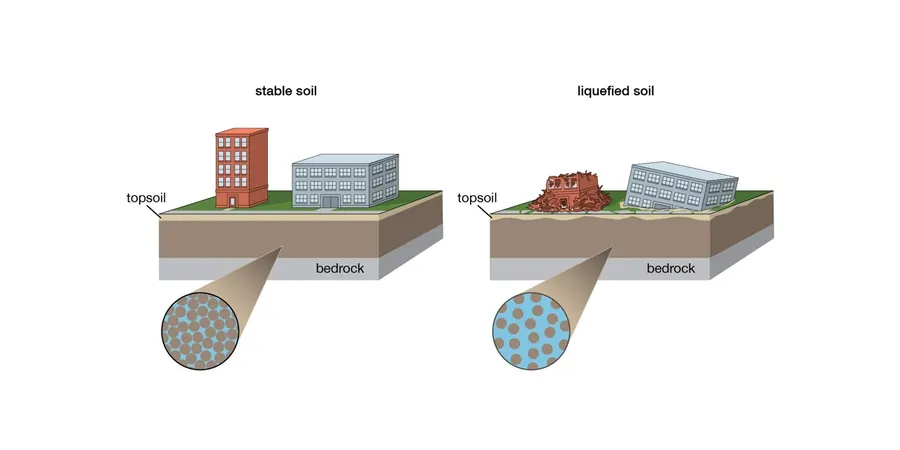
In Memphis, the Mississippi embayment sands tell a story that standard borings often miss. The city sits on thick alluvial deposits, and with a shallow water table across much of Shelby County, loose saturated sands are a routine challenge. We see this in the Wolf River floodplain and along the Loosahatchie bottoms. A standard penetration test gives you N-values, but converting those numbers into a post-earthquake settlement estimate requires more than a spreadsheet. Our team runs the NCEER (Youd-Idriss 2001) procedure, factoring in the fines content from a grain size analysis and the plasticity index from Atterberg limits tests to avoid over-conservative results that kill a project budget. When a client needs a rapid screening, we start with the simplified procedure. When the numbers get tight, we push for a CPT. Memphis deserves a straight answer on liquefaction risk, not a generic report.

A correct liquefaction analysis in the Mississippi embayment is 30% calculation and 70% knowing which sand layer to sample.
Our service areas

Methodology and scope

Between the sandy ridges of East Memphis and the historic riverfront downtown, the subsurface changes fast. A warehouse near President's Island might hit clean sands with SPT N-values below 10 at 15 feet, triggering a high cyclic stress ratio concern. Five miles east, older terrace deposits might pass with no issue. The difference hinges on two things: the groundwater elevation on the day of drilling, and the percentage of non-plastic fines. Our approach ties field data—SPT blow counts or CPT tip resistance—directly to the IBC 2021 site class and the design peak ground acceleration from the USGS hazard maps. For critical structures, we run a site-specific response analysis instead of relying on the two-parameter code spectrum. A MASW survey gives us the shear wave velocity profile to confirm the site class, and when we pair that with a borehole, the subsurface model tightens up considerably.
Soil Liquefaction Analysis in Memphis: Practical Geotechnical Guidance
Technical reference — Memphis

Local considerations

A five-story apartment building on Poplar Avenue was designed with shallow footings. The geotech report from the previous owner had skipped the liquefaction check, citing low seismicity. The problem is that the USGS hazard maps for Memphis include the New Madrid seismic zone, and a magnitude 7+ event, though infrequent, drives a design PGA of 0.20g to 0.25g for site class D. At that acceleration, the loose sand layer we found at 12 feet would liquefy. Total settlement estimated at 3 to 4 inches, differential settlement enough to shear plumbing connections and crack partition walls. We recommended a ground improvement program—vibrocompaction—and a verification CPT program. The retrofit added cost, but it was a known cost. The alternative was unknown liability. For existing structures in Memphis, a screening-level liquefaction analysis is the cheapest insurance a property owner can buy.

Need a geotechnical assessment?

Reply within 24h.

Email: contact@geotechnical-engineering1.org

Applicable standards

IBC 2021 (Chapter 16, Section 1613), ASCE 7-22 (Chapter 11, 20, 21), ASTM D1586-18 (Standard Test Method for SPT), ASTM D5778-20 (Standard Test Method for CPT), NCEER Workshop (Youd-Idriss 2001)

Technical parameters

ParameterTypical value
Analysis methodNCEER simplified procedure (Youd-Idriss 2001)
Field testSPT (ASTM D1586) or CPT (ASTM D5778)
Fines content correctionPer Seed et al. (2003) update
Design earthquake2% probability in 50 years (IBC 2021)
Post-liquefaction settlementIshihara & Yoshimine (1992) method
Reporting metricFactor of safety and total settlement in inches
Lab supportGrain size, Atterberg limits, unit weight

Frequently asked questions

Does Memphis really have a liquefaction problem?

Yes. The city sits on deep alluvial sands of the Mississippi embayment, and the water table is often less than 10 feet below grade. The New Madrid seismic zone, while distant, can generate long-period shaking strong enough to trigger liquefaction in loose, saturated sands. We see susceptible layers in borings across Shelby County.

What is the cost of a soil liquefaction analysis in Memphis?

A complete liquefaction analysis, including SPT-based triggering, settlement estimates, and a signed report, typically runs between US$2,810 and US$3,830. The exact cost depends on whether we need to mobilize a drill rig for new borings or can work with existing logs.

Can you use CPT instead of SPT for the analysis?

Absolutely. CPT gives a continuous profile of tip resistance and sleeve friction, which removes the hammer-energy and borehole disturbance uncertainties of the SPT. We follow the Robertson and Wride (1998) CPT-based procedure. It is faster and often cheaper when we need data from 40 to 80 feet depth.

How long does the analysis and report take?

If the borings or CPT soundings are already done, we deliver the liquefaction report within five to seven business days. If we need to mobilize a rig, add a week for field work and lab testing of fines content. Rush turnaround is available for tight construction schedules.

Location and service area

We serve projects across Memphis and its metropolitan area.

View larger map