GEOTECHNICAL ENGINEERING
MEMPHIS
HomeFoundationsRaft/mat foundation design

Raft/Mat Foundation Design for Memphis Soils: Beyond the Quick Fix

Technical studies that support your project.

LEARN MORE

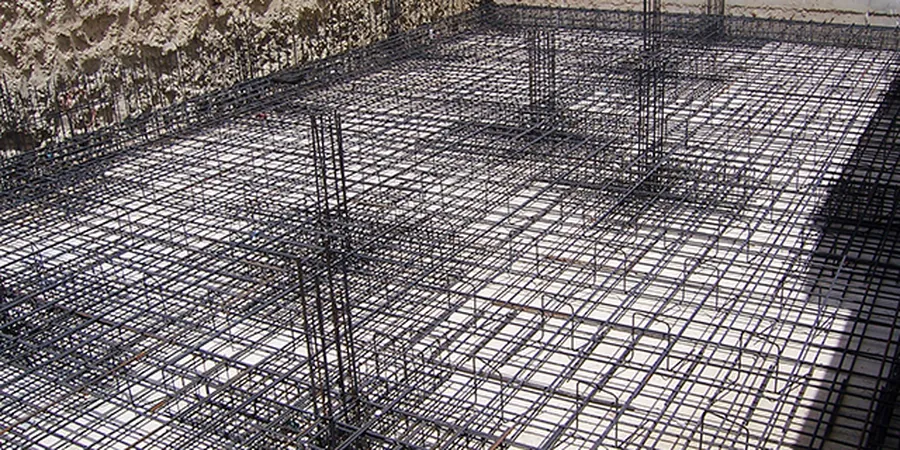
The most common misstep we see with Memphis projects is treating a mat foundation as just a thicker slab on grade when the site sits inside the New Madrid seismic zone. A raft foundation here has to do more than spread load—it has to bridge soft, variable lenses of alluvium that shift behavior between a dry August and a saturated February. Our team approaches each design as a site-specific seismic bridge, not a generic mat. Before finalizing geometry, we often pair the stratigraphy from SPT drilling with CPT soundings to catch thin, compressible clay seams that standard borings miss. The interaction between the Mississippi River’s historic meander deposits and the high water table makes generic bearing values unreliable, and the IBC explicitly demands a deeper look when Site Class D or E comes up in the report.

A mat foundation in the Memphis embayment is a seismic beam on a variable subgrade—get the modulus wrong and differential settlement will chase every wall joint through the building.
Our service areas

Methodology and scope

Memphis sits atop the Mississippi embayment, where up to 3,000 feet of unconsolidated sediment overlies Paleozoic rock. Near the surface, what we encounter most often are Pleistocene loess deposits over graded alluvium—silts and fine sands that can lose strength rapidly under cyclic loading. A mat foundation here has to work with a typical allowable bearing pressure that ranges from 1,500 to 3,000 psf depending on the proximity to the Wolf River floodplain, and those numbers drop quickly once you account for long-term settlement. The design has to integrate the results of a liquefaction assessment because the NCEER/Youd-Idriss procedure often flags loose sand layers at depths between 15 and 35 feet that could fluidize during a design-level event. We calculate differential settlement under the full structural load using subgrade reaction modulus values derived from in-situ testing, not textbook tables, which makes the difference between a floor slab that stays flat and one that cracks along the partition walls within two years.
Raft/Mat Foundation Design for Memphis Soils: Beyond the Quick Fix
Technical reference — Memphis

Local considerations

The rigs we use for subsurface investigation around Memphis are truck-mounted CME-75 or Diedrich D-50 drill rigs that can push through the stiff loess cap and into the saturated alluvium without losing sample recovery. The real operational challenge is the water table: you can hit groundwater at 8 feet near Nonconnah Creek, and the hole collapses fast if you don't keep the casing advancing. For raft foundation projects, we run electric cone penetrometer equipment from a 20-ton reaction truck to get continuous tip resistance and sleeve friction profiles—data that directly feeds the settlement and bearing capacity models. Without that profile, you risk designing a mat that is either dangerously thin over a soft pocket or unnecessarily thick where the loess is competent, and both outcomes cost money in Memphis construction budgets.

Need a geotechnical assessment?

Reply within 24h.

Email: contact@geotechnical-engineering1.org

Applicable standards

ASCE 7-22 (Minimum Design Loads and Seismic Criteria, Chapter 20 Site Classification), IBC 2021 (Section 1806: Foundation Design, Table 1604.5 Settlement Limits), ASTM D1586-18 (Standard Penetration Test), ASTM D2487-17 (Unified Soil Classification System), ACI 360R-10 (Guide to Design of Slabs-on-Ground, adapted for structural mats), NCEER-97-0022 (Youd-Idriss liquefaction evaluation procedure)

Technical parameters

ParameterTypical value
Typical allowable bearing (Memphis loess)2,000 – 3,000 psf
Subgrade reaction modulus (kv)50 – 150 pci (site-adjusted)
Seismic site class (IBC/ASCE 7)D or E depending on NEHRP vs30
Design groundwater level5 – 15 ft below grade (seasonal)
Reinforcement gradeASTM A615 Gr. 60 or 75
Maximum total settlement target1.0 in (per IBC Table 1604.5)
Differential settlement limit0.5 in over 40 ft span

Frequently asked questions

Why does a mat foundation in Memphis require a site-specific seismic design, and can't we use a prescriptive approach from the IBC?

The IBC references ASCE 7 site classification, and most of Memphis falls into Site Class D or E due to the thick unconsolidated sediments of the Mississippi embayment. A prescriptive mat thickness ignores the amplification effects that the soft soil column produces during a New Madrid seismic event. Site-specific response analysis is needed to determine the design spectral accelerations at the foundation level and to check liquefaction-induced settlement, which can easily exceed tolerable differential movement limits if not modeled explicitly.

How does the high groundwater table near the Mississippi and Wolf River affect mat foundation design in Memphis?

The groundwater table in many Memphis project sites fluctuates between 5 and 15 feet below grade, and it directly influences the effective stress used in bearing capacity calculations. A mat foundation designed assuming dry conditions will be undersized once buoyancy and reduced soil strength are considered. We account for hydrostatic uplift in the structural design and verify subgrade modulus under saturated conditions, which often controls the mat thickness more than the structural column loads do.

What is the typical cost range for a raft/mat foundation design and the required geotechnical investigation in Memphis?

For a complete geotechnical investigation and mat foundation design package on a typical commercial lot in Memphis, budgets usually fall between US$1,030 and US$4,090 depending on the number of borings, CPT soundings, and the complexity of the structural analysis. Sites requiring deeper drilling to reach competent bearing or extensive liquefaction mitigation studies will trend toward the upper end of that range.

Location and service area

We serve projects across Memphis and its metropolitan area.

View larger map